What is the Novaa Light Boot?
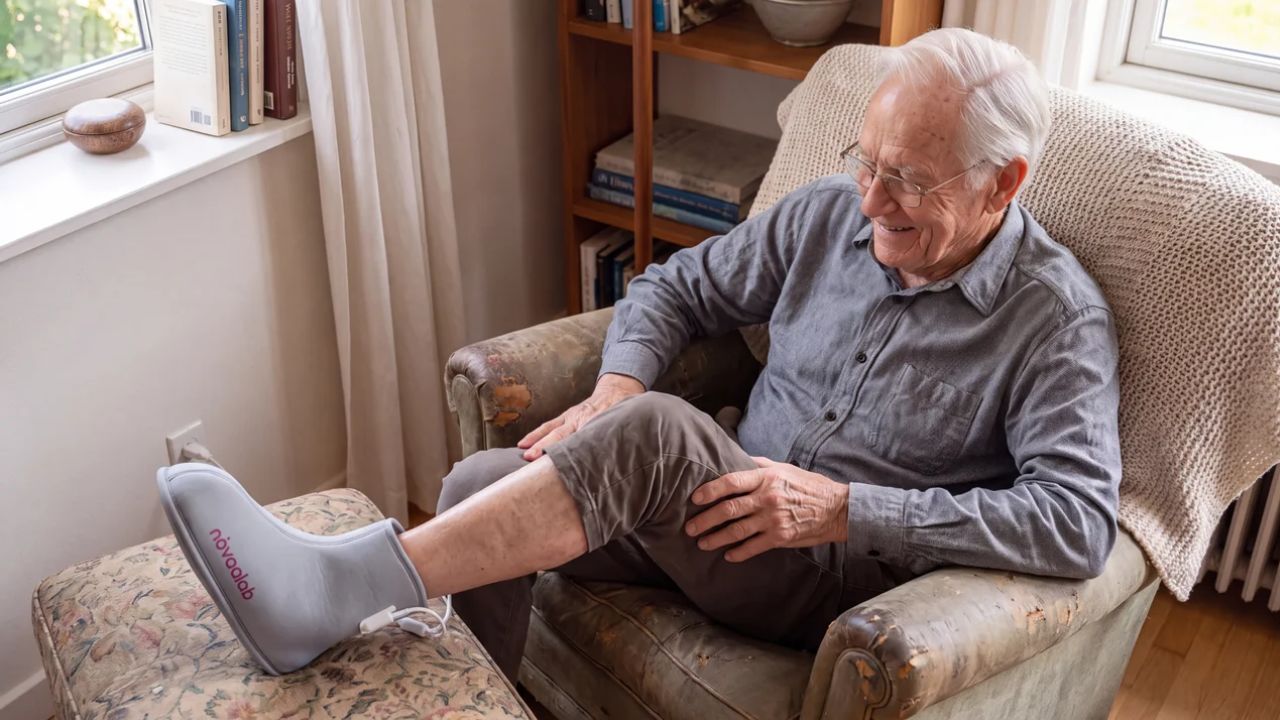
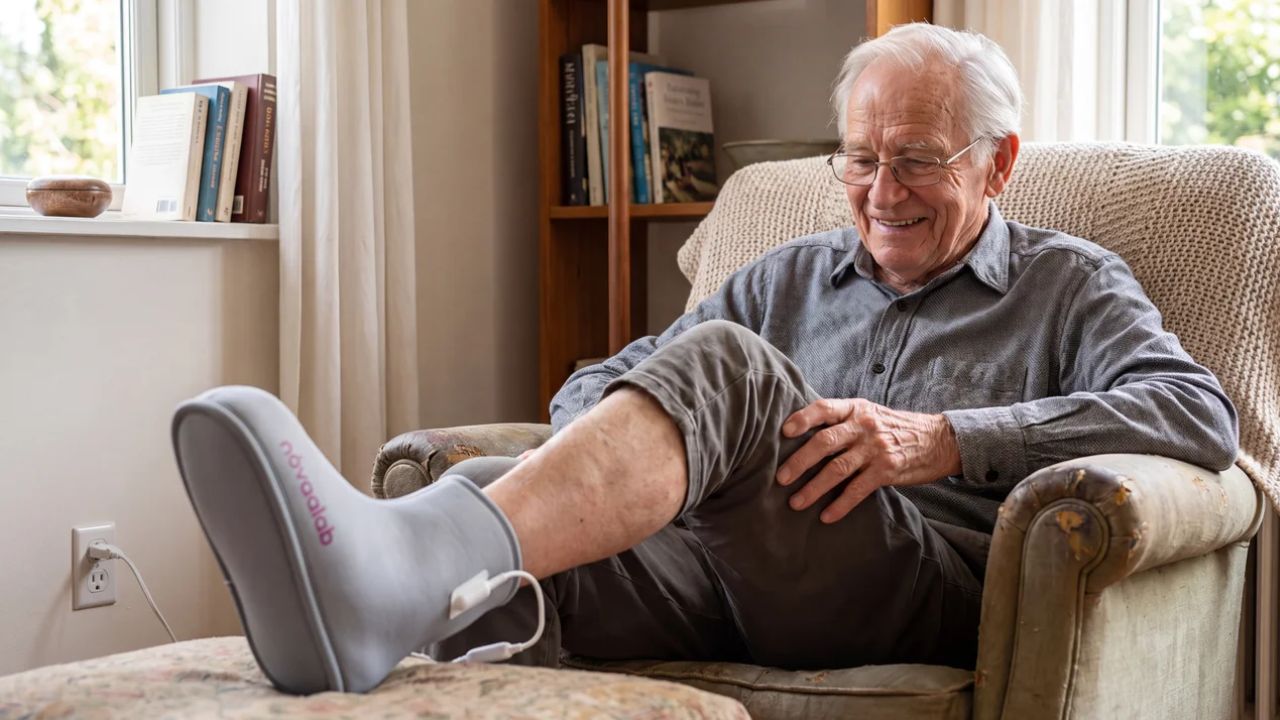
The Novaa Light Boot is a wearable red and near-infrared light therapy device designed to provide full-coverage relief and recovery for the feet and ankles.
According to NovaaLab’s product details, the boot has 170 LEDs and combines 630/660 nm red light with 830/850 nm near-infrared light. Its listed dimensions are approximately 34 × 14.5 × 21 cm.
The brand says it accommodates feet up to US 14 or EU 48. Australian sizing can differ, so compare your foot measurements with the internal space rather than relying on a shoe-size conversion.
The setup uses a controller for intensity and pulse settings. NovaaLab describes 20-minute sessions, but the supplied manual should guide your routine.
See the Novaa Light Boot’s current price and packages.
Those external measurements are useful for storage, but they aren’t a reliable description of the room your foot has inside. The lining, seams and light panels take up space. If you’re between sizes, ask for usable internal length, width across the forefoot and the size of the ankle opening.
Foot shape matters as much as length. A high instep may make entry awkward even when the toe section is long enough. A broad heel may sit differently from the foot used in the product photographs. If swelling varies during the day, base your fit questions on when you expect to have a session.
I’d also establish whether you can open the boot fully and place your foot into it, or need to slide your foot through a tighter opening. That distinction can matter more than a generous maximum shoe size, particularly if bending or fastening small closures is difficult.
Does the boot shape make a useful difference?
Yes, in terms of positioning. The underside of the foot, heel and ankle aren’t easy to cover with a rigid panel. A boot provides a repeatable way to place the light around that area.
That doesn’t tell us how evenly every part of your foot receives light. The distance between the LEDs and skin will vary with fit. A headline output figure measured at contact also isn’t a measurement taken at every point inside the boot.
For someone dealing with a single small spot, our standard Novaa Light Pad coverage provides another format to compare. The boot becomes more attractive when repositioning a pad feels like too much effort.
I’d plan to use it while seated. It is a treatment device, and its appearance doesn’t make it suitable footwear for walking around the house.
One boot or two: what changes in practice?
For one foot, a single unit is the straightforward purchase. For both feet, the decision is partly about time. At the manufacturer’s stated 20 minutes per foot, one boot means roughly 40 minutes of light sessions, plus the changeover. Two units could reduce that to one 20-minute period if the selected package supports simultaneous operation.
That arithmetic doesn’t mean everyone needs daily sessions or that more treatment is better. It simply makes the ownership difference easier to see. Someone happy to read for an hour may see little value in a pair. Someone trying to fit a session into a short evening break may feel differently.
Check the power arrangement too. A photograph of two boots doesn’t establish how many controllers, power supplies or sockets the package needs. I’d want the full contents listed clearly, including whether each boot can be controlled separately.
Choose a seated location with somewhere to put the controller and a clear route for the cable. Having to unplug it whenever another person walks past will quickly become annoying. Allow a moment to remove the boot before standing, even if the session has already finished.
For shared use, cleaning becomes part of the purchase decision. Ask which inner surfaces can be cleaned and how long they need to dry. A removable liner would be useful, but I haven’t verified that this model has one.
What are the main drawbacks?
The specialised design limits versatility. You can’t sensibly buy a foot-shaped device and expect it to cover your back equally well.
Then there’s the two-foot question. One boot means separate sessions if both feet need attention. A pair may make the routine easier, but it also changes the price, storage space and number of cables. Check the cart contents carefully.
Comfort depends on how the lining, ankle opening and internal space suit your foot. I also put cleaning effort and warmth during a session on the list of things that matter. If you have limited hand mobility, I’d also ask for a demonstration of how it opens and closes.
The bigger limitation concerns health claims. Marketing for nerve pain, circulation and heel pain isn’t proof that this exact device treats their underlying causes. Our article on red light therapy for muscle pain offers background; it shouldn’t be read as a diagnosis for foot symptoms.
Light Boot, flat pad or compression boots?
The Light Boot is the most specific choice of the three. Its advantage is positioning around the foot and ankle; it isn’t especially useful for someone whose main priority is the calf, thigh or back.
A flexible light pad makes more sense when you want one product for several areas. It may need more adjustment around the heel, but it avoids committing your entire budget to foot sessions. If you already own a suitable pad, the boot would mainly be a convenience upgrade.
Compression boots are a different purchase. Their defining feature is an air-pressure sequence, and many models cover much more of the leg. A shopper looking for that squeezing sensation after exercise won’t get an equivalent experience from a light boot. Compare the type of session you want before comparing prices.
What would count as a worthwhile result?
I’d separate ease of use from health outcomes. Easy entry, secure positioning and simple controls are things you can assess directly. Whether the device changes a diagnosed foot condition requires much more than a comfortable first session.
The four listed wavelengths also don’t establish four separate benefits. They describe the light sources. To support a condition-specific claim, useful research would need to identify the treatment settings, who used the device, what it was compared with and whether the improvement mattered in everyday life.
In a practical review, I’d track whether the routine is manageable and whether normal activities feel different over time, while keeping any existing care plan consistent. I wouldn’t use temporary comfort as proof of nerve repair or a reason to ignore worsening symptoms.
There is also a sensible buying threshold here: if you can’t get a clear answer on internal fit, cleaning and package contents, the uncertainty is too high for such a specialised product. A discount doesn’t solve a boot that you can’t comfortably put on or use.
Would I buy it?
I would consider it for the shape and ease of repeated placement, after confirming fit and discussing persistent symptoms with a podiatrist or clinician. For occasional foot soreness, it is a fairly specialised purchase.
Australian buyers should confirm delivery eligibility for their address, the required power connection and the full checkout total. Ask how a return would work before ordering a pair.
If those details are suitable, compare the Light Boot options here.