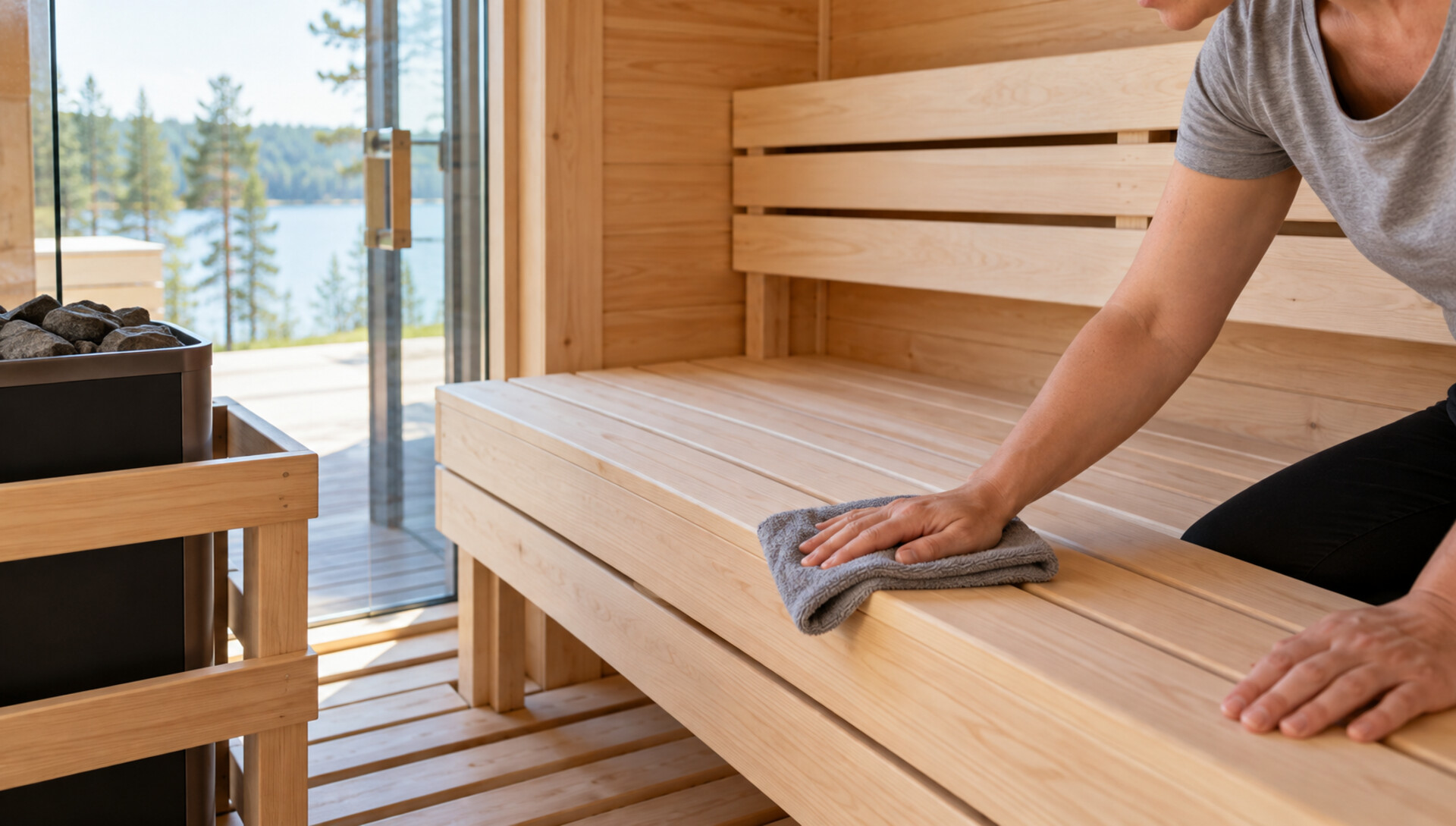
Featured image: AI-generated editorial illustration.
Clean a home sauna using the method approved for its timber, heater and other surfaces, then let it dry properly. Start with a cool unit and follow the manual’s power-isolation instructions. Remove towels and loose debris, clean permitted surfaces with suitable tools, and keep water and products away from electrical components.
A traditional sauna bench may tolerate a cleaning method that is unsuitable for an infrared panel or control screen. Separate everyday tidying from periodic cleaning and technical maintenance. There is no need to deep-clean after every session, but moisture and dirt should not be left to accumulate.
What should you check before cleaning?
Identify the sauna type, timber finish and heater. Find out whether bench sections are removable, which cleaners are allowed and whether the manual permits rinsing. Keep infrared-cabin instructions separate from guidance written for a traditional sauna.
Our home sauna construction guide explains why materials and installation matter. The same details determine what can get wet, what should remain dry and which surfaces need specific care.
Gather a clean cloth, a soft brush if permitted, the approved cleaner and a suitable way to remove floor debris. A kitchen scourer or strong bathroom spray should not become the default simply because it is already available.
What should happen after each session?
Remove used towels and loose items, deal with spills according to the instructions, and allow the cabin to dry through its intended ventilation. Check that nothing has been left on or near a heater.
If the maker recommends a seating towel, use a clean one and wash it separately as ordinary laundry. This helps manage direct contact with the timber without coating the benches in a cleaning product each day.
Notice areas that dry slowly, such as floor corners, the door base and beneath accessible bench sections. A quick visual check can reveal a leak or blocked airflow. It should not involve removing electrical covers.
How should you clean benches, glass and floors?
Work by surface. Harvia’s traditional-sauna guidance describes suitable detergent and a soft brush used along the bench’s wood grain, followed by its specified rinsing and drying steps. That is guidance for the relevant construction, not a cleaning method for an infrared heating panel.
| Area | Care approach | Important limit |
|---|---|---|
| Timber benches and backrests | Approved cleaner and a soft cloth or brush, following the grain | Rinse or sand only when permitted |
| Glass door | Permitted glass-cleaning method, removing residue | Protect adjacent timber, seals and controls |
| Floor and removable mat | Remove debris, then use the material's cleaning method | Do not leave pooled water beneath a mat |
| Infrared panels and controls | Specific dry or lightly damp method from the manual | Do not spray, soak or hose down |
| Heater and stones | Separate maintenance schedule for that heater | No improvised electrical servicing |
When comparing cabins, accessible surfaces and clear care instructions are useful ownership features. Our infrared sauna comparison helps with broader choices. Cleaning access can matter as much as a feature that looks impressive on a specification sheet.
Can you use vinegar, bleach or a steam cleaner?
Do not assume a household shortcut is suitable for every sauna. Check the actual product, concentration and surface with the maker. A cleaner accepted on glass may affect a neighbouring timber panel, seal or finish.
Avoid pressure washing, steam cleaning or soaking unless the manufacturer explicitly provides that procedure for the relevant area. A home infrared cabin is not a wet room. Do not apply furniture polish, paint or a generic timber coating because it works on another wooden item in the house.
Some traditional-sauna instructions include a compatible paraffin-oil treatment for suitable benches. This does not mean every timber, factory finish or infrared cabin should be oiled. Check compatibility and any permitted test procedure first.
How should the sauna dry after cleaning?
Remove cleaner and excess moisture using the approved method, then follow the manual’s ventilation and drying instructions. If these include a drying heat cycle, first remove cloths and equipment and check that the cabin is ready for normal operation.
Do not improvise with a portable heater inside the sauna. If surfaces repeatedly remain damp, find the reason rather than increasing heat indefinitely. Persistent water entry needs an appropriate repair.
An outdoor cabin has additional exposure around its roof, door and exterior. Our indoor versus outdoor sauna comparison explains those ownership differences. Interior cleaning does not fix drainage or weatherproofing.
What belongs on a periodic checklist?
Start with the maker’s schedule and actual use. Inspect accessible bench fixings, door operation, seals and visible wear. For a stone heater, use its separate guidance on stone inspection and replacement rather than treating stones as permanent fittings.
Persistent growth, musty odours, water stains or recurring condensation need investigation. Ask the supplier or an appropriate specialist about moisture and damage. Coating a mark or repeatedly using fragrance does not resolve the cause.
Our Inner Light Bella Deluxe review provides a model-specific example of a larger outdoor cabin. Compare the actual access, installation and care documentation before assuming one routine fits every sauna.
Frequently asked questions
How often should I deep-clean a home sauna?
Follow the manual and adjust for actual use and visible dirt. Regular towel removal and drying are different from deep cleaning; there is no universal weekly schedule.
Can I hose down an infrared sauna?
No. Use the maker's surface-specific instructions and keep water away from heating panels, controls and electrical components.
Should I oil the benches?
Only with a compatible treatment recommended for that timber and finish. Traditional bench advice does not apply automatically to every infrared cabin.
Can the heater help dry the sauna?
Use a drying heat cycle only when the instructions include it. Remove cleaning materials first and follow the normal operating precautions.
Are dark marks always mould?
Colour alone does not establish the cause. Ask the supplier about persistent or spreading marks, particularly with moisture or odours. Check before sanding or coating them.
References
- BSC Wellness. (n.d.). Caring for your sauna (and steam room). Retrieved November 2, 2026, from https://www.saunas.com.au/guides/caring-for-your-sauna/
- Harvia. (n.d.). 5 sauna maintenance tips. Retrieved November 2, 2026, from https://www.harvia.com/en/ideas-and-trends/inspiration/5-sauna-maintenance-tips/
- Harvia. (n.d.). Maintaining your sauna. Retrieved November 2, 2026, from https://support.harvia.com/hc/lt/articles/22158333579676-Maintaining-your-sauna