We include links to products we think are useful for our readers. If you click and buy a product through one of the affiliate links on this page, we may earn a small commission. Please read our disclosure.
Change ice bath water after every one to three uses if your tub has no filter or sanitising system. A covered tub with proper filtration and water treatment may last several weeks, but it still needs regular testing, cleaning and filter care.
There is no single schedule that suits every setup. Water life depends on how many people use the bath, whether they shower first, the outdoor temperature and how well the system controls dirt and microbial growth.
Clear water is not always clean water. A simple maintenance routine is more reliable than waiting for a smell or cloudy appearance.
How Often Should You Change Ice Bath Water?
Use these ranges as a practical starting point:
- Basic tub with no filter or sanitiser: Change the water after one to three uses.
- Covered personal tub with careful hygiene: Change it every three to seven days, or sooner if quality drops.
- Filtered and sanitised ice bath: A full change may be needed every two to four weeks, depending on testing, usage and the manufacturer’s instructions.
- Shared or high-use tub: Test and maintain it more often, with more frequent water changes than a single-user bath.
These are not guarantees. Hot weather, leaves, dust, sweat and repeated use can shorten each interval. A small tub also has less water to dilute contamination than a larger one.
If you use a chemical treatment, follow the product and ice bath manufacturer’s directions. Our guide to using hydrogen peroxide for ice baths explains one option, but no treatment removes the need to clean the tub itself.
Why Does Ice Bath Water Need Regular Care?
Every user adds sweat, skin oils, hair, dead skin and microorganisms to the water. Outdoor tubs also collect dust and organic debris. Cold temperatures may slow the growth of some microbes, but they do not sterilise the bath.
Microorganisms can attach to wet surfaces and form biofilms. These slimy layers are harder to remove than free-floating contamination and can persist in pipework, filters and textured surfaces. That is why wiping the waterline and cleaning hidden components matters, even when the water looks acceptable.
A cover helps, but it only reduces new debris. It does not filter existing water or clean contamination already inside the system.
What Changes the Water Replacement Schedule?
Four factors make the biggest difference.
Filtration and circulation
A filter captures particles while circulation moves water through the treatment system. A chiller with continuous circulation can therefore support a longer maintenance interval than a still tub filled with tap water.
Filters need attention too. Rinse or replace them on schedule. A dirty cartridge restricts flow and can become another place for material to collect.
Sanitising method
An approved sanitising system helps control microorganisms between full water changes. The correct dose and testing method depend on the product, tub materials and manufacturer’s guidance.
Never guess chemical amounts or mix products. Some combinations can create harmful reactions, damage equipment or irritate skin and eyes.
Bathing hygiene
A quick shower before plunging can keep sweat, sunscreen, body oils and dirt out of the bath. Clean swimwear helps as well. If several people use the tub, the water will normally need more frequent attention.
This is especially important for a portable inflatable ice bath, which may have no built-in circulation or filtration.
Location and climate
An uncovered tub under trees will collect more debris than a covered unit indoors. Direct sunlight and warm ambient temperatures can also make water management harder. Keep the bath covered when it is not in use and place it on a clean, well-drained surface.
What Are the Signs You Should Change the Water Now?
Drain and clean the bath if you notice:
- cloudy, foamy or discoloured water
- an unusual, musty or strong chemical smell
- a slippery film on the walls or floor
- visible debris that filtration does not remove
- skin or eye irritation after a session
- a filter that quickly clogs or loses flow
- water test results outside the range specified for your system
Do not try to rescue badly contaminated water by adding random extra chemicals. A full drain, clean and refill is often the safer and simpler option.
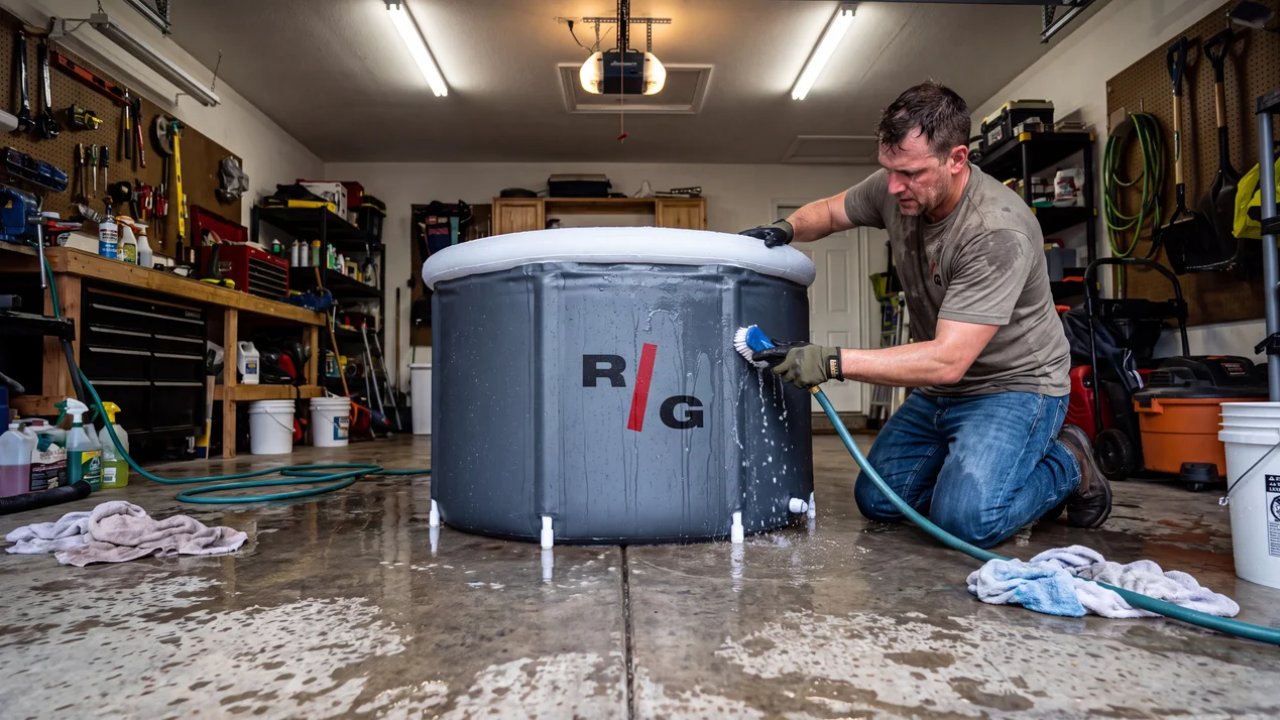
How Do You Clean an Ice Bath Properly?
Start by switching off and unplugging chillers, pumps or other electrical equipment according to the manufacturer’s instructions. Drain the tub to an appropriate location.
Then:
- remove loose debris and take out the filter
- wash the internal surfaces with a product approved for the tub material
- pay attention to the waterline, corners, lid, hoses and fittings
- rinse thoroughly so cleaning residue does not remain
- clean or replace the filter as required
- inspect seals, connections and cables before refilling
- refill with fresh water and restart the treatment system correctly
Do not use abrasive tools on soft liners. If you have a converted chest freezer ice bath, follow the electrical isolation and sealing precautions for that setup. Never enter a chest freezer while it is connected to power.
How Can You Make Ice Bath Water Last Longer?
The goal is to reduce what enters the bath and keep the treatment system working efficiently.
Shower first, wear clean swimwear and keep feet clean before stepping in. Use a fitted cover whenever the bath is idle. Remove leaves and floating debris promptly instead of allowing them to break down in the water.
Maintain a simple log for water changes, filter cleaning and water test results. This is especially helpful when several people use the bath. Stable water temperature also matters for the user experience, so check the guidance on ice bath temperature and time rather than making the water colder to hide poor maintenance.
Conclusion
An unfiltered ice bath usually needs fresh water after one to three uses. A well-maintained, filtered and sanitised setup may last several weeks, but only when water quality, filters and surfaces are checked consistently.
Use a schedule as your baseline, then act sooner when the water changes in appearance, smell or feel. Clean water is part of safe cold exposure, not a separate extra.
References
Donlan, R. M. (2002). Biofilms: Microbial life on surfaces. Emerging Infectious Diseases, 8, 881–890. https://doi.org/10.3201/eid0809.020063
Finnegan, M., Linley, E., Denyer, S. P., McDonnell, G., Simons, C., & Maillard, J.-Y. (2010). Mode of action of hydrogen peroxide and other oxidizing agents: Differences between liquid and gas forms. Journal of Antimicrobial Chemotherapy, 65, 2108–2115. https://doi.org/10.1093/jac/dkq308
Goeres, D. M., Palys, T., Sandel, B. B., & Geiger, J. (2004). Evaluation of disinfectant efficacy against biofilm and suspended bacteria in a laboratory swimming pool model. Water Research, 38, 3103–3109. https://doi.org/10.1016/j.watres.2004.04.041