Our buyer's guides are based on years of collective experience from our health enthusiasts, fitness experts, and real-world input from our community. They reflect informed perspectives, not sponsored endorsements.
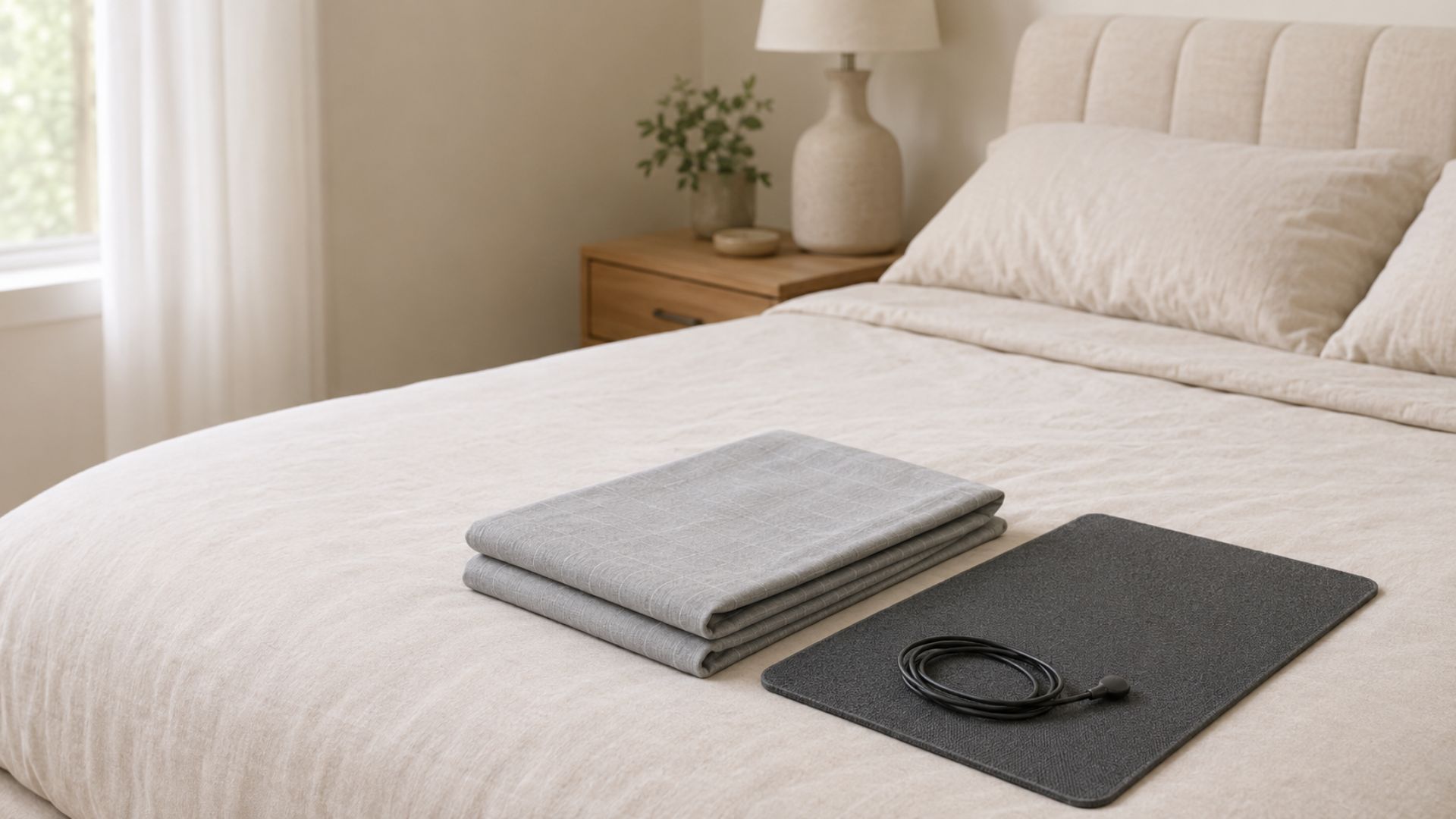
Grounding sheets are usually the better choice for sleep, while grounding mats are more practical for desk work, relaxation, and daytime use.
Neither option has been proven to deliver better health results than the other. The right choice mainly comes down to where you plan to use it, how much comfort matters to you, and whether you want a product that stays in one place or moves with your routine.
Quick Answer
Grounding sheets are generally better for sleep, while grounding mats are more practical for daytime use.
- Choose a grounding sheet if you want an option designed for your normal bedtime routine.
- Choose a grounding mat if you want something compact for desk work, sitting, relaxation, or travel.
- Sheets are usually more comfortable for overnight use because they are designed to work with bedding.
- Mats are more flexible because you can move them between your home office, lounge, and other spaces.
- Neither option has been proven to deliver better health outcomes than the other.
- Always check the outlet, cord, and product setup before using either option.
What Is a Grounding Sheet?
A grounding sheet is a fitted sheet, flat sheet, or underlay made with conductive fibres. It connects to a grounding port through a cord, allowing the sheet to create a grounding connection while you sleep.
The biggest appeal is convenience. Once it is set up properly, you can use it as part of your normal bedtime routine without setting aside extra time during the day.
Grounding sheets are often made with cotton blended with silver or stainless steel fibres. The material affects comfort, maintenance, durability, and long-term value. If you are comparing fabrics, warranties, and current options, see our guide to the best grounding sheets in Australia.
What Is a Grounding Mat?
A grounding mat is a smaller conductive pad designed for daytime use. Most people place one under their bare feet at a desk, sit on one while reading, or use one during meditation, stretching, or relaxation.
Unlike a sheet, a mat does not need to stay in the bedroom. You can move it between your home office, lounge, and travel bag. That flexibility makes it a better fit for people who do not want to change their bedding or who want to try grounding before buying a larger sleep product.
For a closer look at different sizes, formats, and buyer options, read our guide to the best grounding mats.
| Feature | Grounding Sheets | Grounding Mats |
|---|---|---|
| Best for | Sleep and bedtime routines | Desk work, sitting, relaxation, and travel |
| Size | Covers part or all of a bed | Usually compact and portable |
| Comfort | Designed to feel like bedding | Better for feet, sitting, or short sessions |
| Setup | Needs to fit your mattress and bedding | Usually quick to place under feet or on a chair |
| Portability | Limited | Easy to move between rooms or take away |
| Care | Needs washing based on material instructions | Often easier to wipe clean, depending on the product |
| Main advantage | Passive use while you sleep | Flexible daytime use |
| Main drawback | More expensive and less portable | Not as comfortable or practical for full-night sleep |
Grounding Sheets Are Better for Sleep
If your goal is to use grounding while you sleep, a sheet is the more natural choice.
It is designed to sit on a mattress and work with your bedding setup. A quality grounding sheet should feel comfortable enough to use regularly, fit your bed properly, and come with clear care instructions.
A mat can sometimes be placed on a bed, but it may feel too small, firm, or awkward for overnight use. Unless the manufacturer specifically designs it as a mattress mat or sleep mat, it is usually better suited to short daytime sessions.
There is no established ideal amount of time to ground, including while sleeping. Using a sheet during your normal sleep is simply more convenient than setting an alarm to use a mat. Our guide on how long to do grounding explains why there is no proven 20-minute, six-hour, or overnight target.
Grounding Mats Are Better for Work and Daytime Flexibility
A grounding mat makes more sense if you work from home, spend long hours at a desk, or want a product you can use in different places.
You can place it:
- Under your feet while working
- On a chair while reading or watching TV
- On the floor during stretching or meditation
- Beside your bed for a short wind-down routine
- In a suitcase when travelling
Mats are also useful if you are unsure whether you want grounding to become part of your regular routine. They are generally smaller and less disruptive than replacing or adding bedding.
That said, longer use is not automatically better. There is no evidence-based reason to force yourself to use a grounding mat all day. Choose a routine that feels comfortable and easy to maintain.
Which One Is Better for Recovery?
Neither grounding sheets nor grounding mats have been proven to improve recovery more than the other.
Some small studies have explored grounding for sleep, stress, pain, and post-exercise muscle recovery. However, the research is still limited, and study designs vary widely. That means there is no reliable evidence that a sheet is better than a mat, or that either product can replace proper sleep, nutrition, hydration, training management, or medical care. Sleep Foundation and Cleveland Clinic both note that stronger, higher-quality research is still needed.
For recovery, choose based on when you are most likely to use the product:
- Choose a sheet if you want something integrated into your bedtime routine.
- Choose a mat if you want a convenient option after work, after training, or while sitting at your desk.
- Choose neither if you are only buying one because of a promised medical outcome.
Grounding can be an optional wellness habit. It should not be treated as a recovery shortcut.
Comfort, Materials, and Maintenance
Comfort matters more with a grounding sheet because you may spend several hours sleeping on it.
Some sheets use silver fibres, while others use stainless steel. Silver can feel softer, while stainless steel is often more durable and easier to maintain. The best option depends on whether you prioritise softness, laundry convenience, longevity, or value over time.
Grounding mats tend to use conductive rubber, carbon-based materials, or synthetic leather-style surfaces. They are usually easier to move and clean, but they are not designed to feel like regular bedding.
If you want a deeper breakdown of sheet materials, read our comparison of stainless steel vs silver grounding sheets.
Safety and Setup Come First
A grounding sheet or mat can only work as intended if it is connected to a properly grounded outlet or approved grounding system.
Before using either product:
- Check that the cord and connector are not damaged.
- Use an outlet tester or follow the manufacturer’s recommended test method.
- Do not use the product if you feel a shock, burning sensation, or persistent tingling.
- Unplug indoor grounding products during thunderstorms.
- Follow the specific manufacturer’s instructions for setup, cleaning, and contact with the product.
You can follow our step-by-step guide to test a grounding mat or sheet at home before making it part of your routine.
If you ever experience a shock, do not ignore it or assume it is a normal adjustment. Read our guide on why your grounding device may shock you before using it again.
Should You Buy a Grounding Sheet or a Grounding Mat?
Choose a grounding sheet if you:
- Want to use grounding during sleep
- Prefer a set-and-forget routine
- Want a product that feels more like regular bedding
- Have a stable bedroom setup and a nearby verified outlet
Choose a grounding mat if you:
- Work at a desk or spend long periods sitting
- Want something portable and flexible
- Do not want to change your bedding
- Want to try grounding with a smaller product first
- Prefer short, intentional sessions during the day
Choose both only if you genuinely expect to use both. A sheet for bedtime and a mat for desk work can fit different routines, but owning two products is not necessary for most people.
Frequently Asked Questions
Simple answers to help you choose between grounding sheets and grounding mats.
Can I sleep on a grounding mat instead of using a grounding sheet?
Only if the manufacturer says the mat is suitable for sleep. Most standard grounding mats are smaller and less comfortable than sheets, so they are usually better for daytime use.
Is a grounding sheet more effective because it covers more of the body?
Not necessarily. There is no strong evidence that more surface area or longer exposure produces better health outcomes.
Is a grounding mat good for office work?
A mat can be a practical option for desk work because it fits under your feet or on a chair. Just make sure the outlet and cord are safe before using it.
Do I need bare skin contact with a grounding sheet or mat?
Follow the specific product’s instructions. Materials, layers, and setup can vary between brands, so it is best not to assume that every product works the same way.
Do I need both a sheet and a mat?
No. Start with the option that fits the part of your routine where you are most likely to use it consistently.
The Bottom Line
Grounding sheets are generally better for sleep. Grounding mats are better for work, daytime relaxation, and portability.
The best choice is not the one that promises the most benefits. It is the one you can use comfortably, set up safely, and fit into your normal routine.