Our buyer's guides are based on years of collective experience from our health enthusiasts, fitness experts, and real-world input from our community. They reflect informed perspectives—not sponsored endorsements.
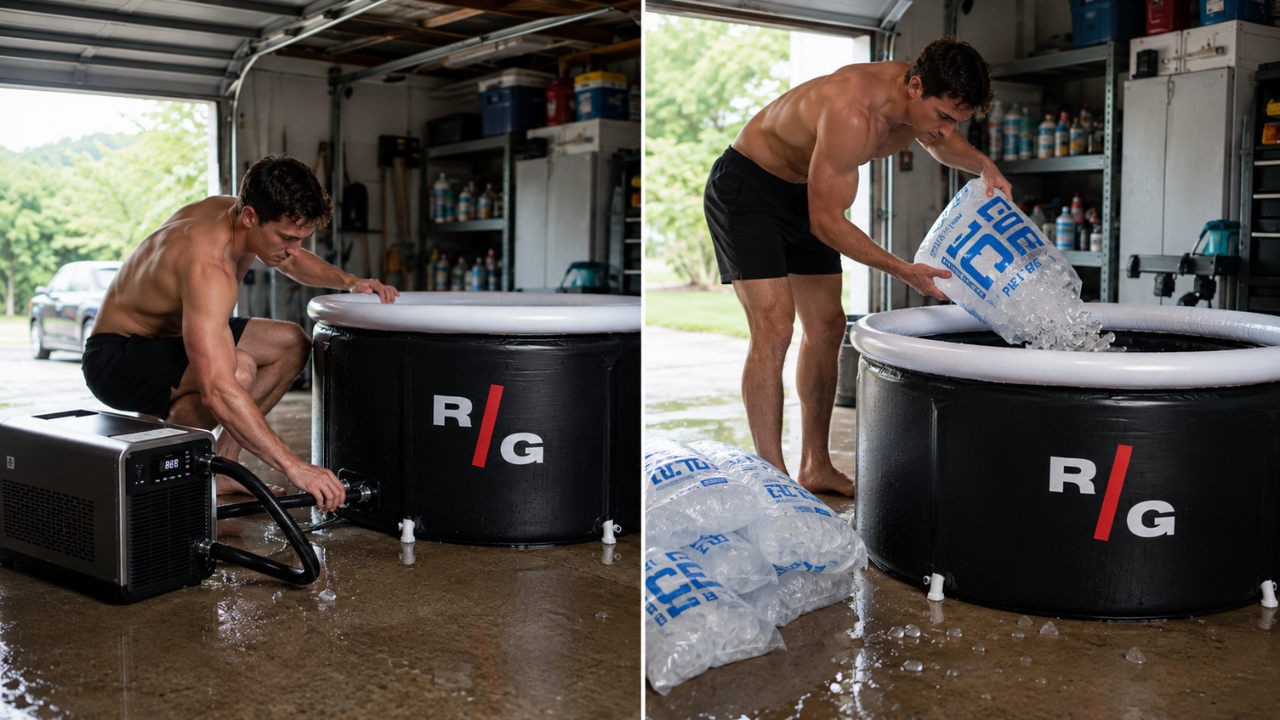
An ice bath chiller is better for frequent home use because it cools the water automatically and holds a more consistent temperature. Bags of ice are better when you plunge occasionally, have limited space or want the lowest upfront cost.
Both methods can create an effective cold bath. The real decision is not which one makes the coldest water. It is which setup fits your frequency, budget and willingness to maintain the equipment.
Is an Ice Bath Chiller Better Than Using Ice?
A chiller is usually better if you use the bath several times each week. Once the system is set up, you can choose a temperature, allow the water to cool and keep the tub ready between sessions.
Ice is simpler at the start. You fill the tub, add enough ice to reach your target temperature and drain or manage the water afterwards. There is no pump or refrigeration unit to service, but buying, transporting and storing ice becomes repetitive.
The best ice baths in Australia include both simple tubs and chiller-based systems. The right category depends more on how often you will use it than on how advanced it looks.
How Does an Ice Bath Chiller Work?
A chiller circulates water through a refrigeration unit, removes heat and sends the cooled water back to the tub. Many systems also include a particle filter, while sanitising features vary by model.
Cooling speed depends on the chiller’s capacity, water volume, starting temperature, ambient heat and insulation. A small unit may maintain a compact tub well but struggle to cool a large, uninsulated bath outdoors.
Read the specifications carefully. Check the recommended water volume, operating temperature, pump requirements, filter type, warranty and whether the unit is designed for cold plunge use.
How Much Ice Does an Ice Bath Need?
The amount changes with the volume of water, tap temperature, target temperature and how quickly the ice melts. In warm Australian weather, one or two small bags may barely shift a large tub.
Measure the water instead of judging by feel. Add ice gradually, stir the bath and allow the temperature to even out before adding more. The goal is a controlled session, not water filled with as much ice as possible.
Our free ice bath calculator can help estimate the ice required from your starting conditions. It is still worth checking the final temperature with a reliable thermometer.
Which Option Costs Less?
Bags of ice have the lower entry cost. You can pair them with a basic tub and avoid buying mechanical equipment. This works well for a trial period or a few sessions per month.
A chiller costs more upfront and adds electricity, filter replacements and possible servicing. It may reduce the ongoing cost and effort of buying ice when use becomes frequent.
Use a simple comparison:
- work out what you spend on ice in an average month
- add the travel time or delivery cost
- estimate the chiller’s purchase price, electricity and routine consumables
- compare both options over the period you realistically expect to keep plunging
Do not calculate the payback using a daily routine you have not yet built. If you are unsure whether the habit will last, start with ice or a portable inflatable ice bath and upgrade later.
Which Gives Better Temperature Control?
A chiller gives better repeatability. You can set a target and use similar conditions each session, provided the unit is correctly sized and the bath is insulated.
Ice creates more variation. The starting water changes with the season, bags differ in size and melting continues while you are in the tub. Stirring and measuring help, but every setup takes some adjustment.
Consistent does not mean colder. Research on cold-water immersion does not support turning every session into a near-freezing challenge. A stable, moderate temperature may be easier to dose and repeat.
Which Is Faster?
Ice can cool a freshly filled tub quickly when you have enough of it. This makes it useful for an unplanned session, although you still need time to buy or make the ice.
A chiller may take hours to bring warm water down to temperature. Its advantage is preparation. With a covered, insulated tub and a suitable operating schedule, the water can be ready when you need it.
If a chiller runs outdoors, heat and direct sun make it work harder. Shade, insulation and a fitted cover improve performance with either method.
Which Is Easier to Maintain?
Ice has fewer mechanical parts. You still need to drain, clean and refill the tub, but there is no pump, filter or refrigeration circuit to manage.
A chiller setup can keep water circulating and filtered, which may extend the time between full changes. In return, you need to clean or replace filters, check hoses and maintain water quality. Filtration removes particles but does not automatically sanitise the water.
Choose a model with replacement filters and service support that are easy to obtain.
What Are the Downsides of a Chiller?
Chillers need power, space and ventilation. Pumps and fans create some noise, and condensation or hose leaks need to be managed. A poorly matched unit may run for long periods without reaching the advertised temperature.
Electrical safety matters around any water setup. Use an appropriate outlet and safety switch, follow local requirements and never enter a tub while equipment that is not designed for occupied operation is energised.
Some people consider a chest freezer ice bath as an alternative cooling system. That approach has specific sealing and electrical risks, and it should never be used while connected to power.
Who Should Choose Bags of Ice?
Choose ice if you:
- plunge once a week or less
- are testing whether cold immersion suits you
- need a setup that can be packed away
- rent or cannot install permanent equipment
- have easy access to affordable ice
Choose a chiller if you:
- plunge several times per week
- want a predictable water temperature
- dislike buying and carrying bags of ice
- can commit to filter and water maintenance
- have a suitable, ventilated place for the system
Can You Start With Ice and Add a Chiller Later?
Yes, and this is often the sensible route. Choose a tub with compatible ports, enough insulation and a volume that a future chiller can handle. Learn how often you genuinely use it before paying for automation.
You may also use ice occasionally to help a small chiller on very hot days, but check the manufacturer’s guidance. Ice and loose debris should not be allowed to block circulation or damage the pump.
Conclusion
Use bags of ice for occasional plunges, portability and a low initial cost. Choose a chiller for frequent use, better temperature control and less day-to-day preparation.
Whichever route you take, size the system properly, measure the water and keep the bath clean. The best home cold plunge is the one you can maintain safely and use for a clear reason.
References
Machado, A. F., Ferreira, P. H., Micheletti, J. K., de Almeida, A. C., Lemes, Í. R., Vanderlei, F. M., Netto Junior, J., & Pastre, C. M. (2016). Can water temperature and immersion time influence the effect of cold water immersion on muscle soreness? A systematic review and meta-analysis. Sports Medicine, 46, 503–514. https://doi.org/10.1007/s40279-015-0431-7
Moore, E., Fuller, J. T., Buckley, J. D., Saunders, S., Halson, S. L., Broatch, J. R., & Bellenger, C. R. (2022). Impact of cold-water immersion compared with passive recovery following a single bout of strenuous exercise on athletic performance in physically active participants: A systematic review with meta-analysis and meta-regression. Sports Medicine, 52, 1667–1688. https://doi.org/10.1007/s40279-022-01644-9
Tipton, M. J., Collier, N., Massey, H., Corbett, J., & Harper, M. (2017). Cold water immersion: Kill or cure? Experimental Physiology, 102, 1335–1355. https://doi.org/10.1113/EP086283