Our buyer's guides are based on years of collective experience from our health enthusiasts, fitness experts, and real-world input from our community. They reflect informed perspectives—not sponsored endorsements.
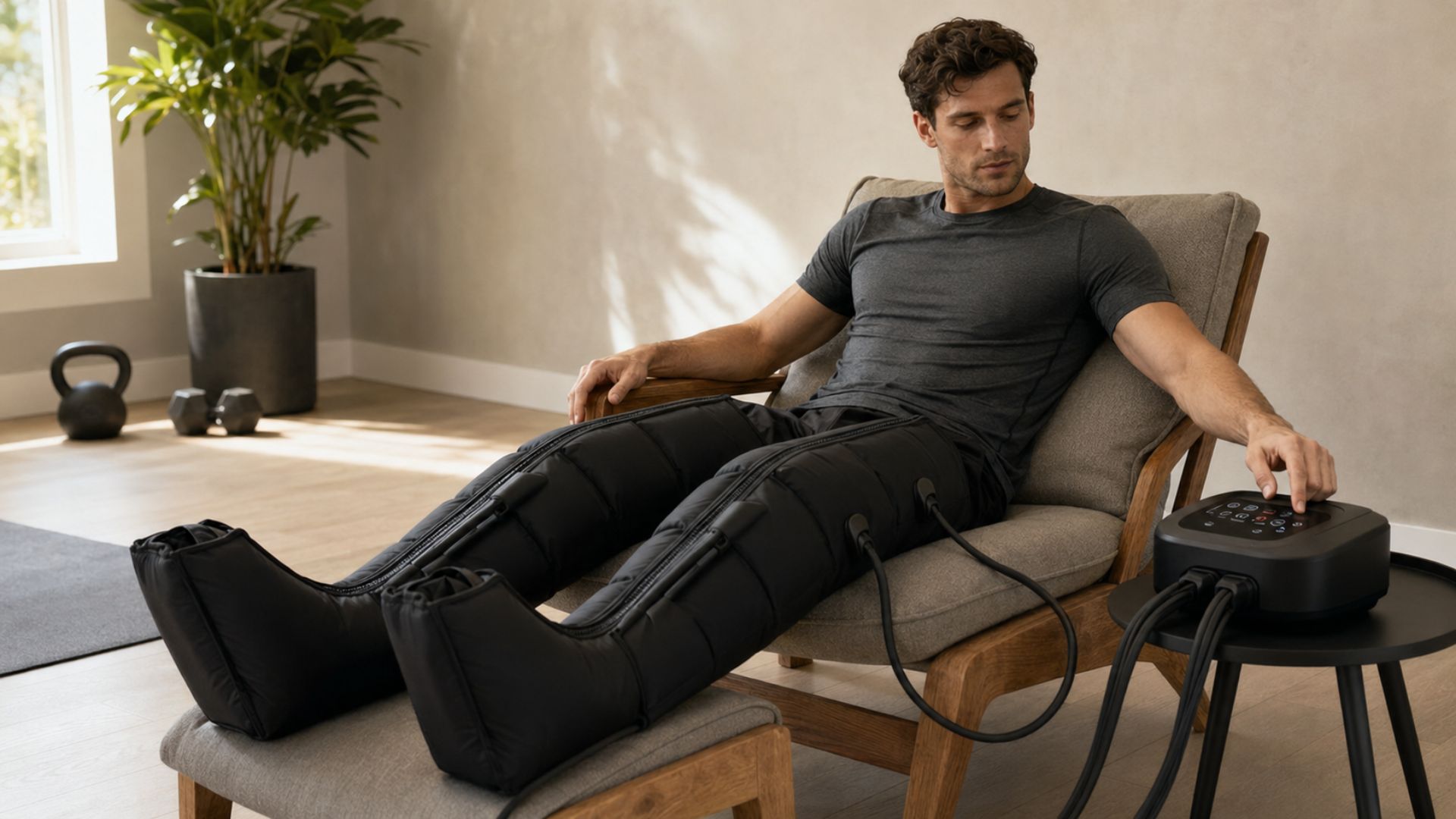
Compression boots work by filling and releasing a series of air chambers around your legs. The chambers usually inflate from the feet upwards, creating controlled pressure that helps move venous blood and fluid towards the centre of the body.
For athletes, this rhythmic pressure can make tired legs feel lighter and temporarily reduce muscle soreness. However, the evidence is less clear on whether compression boots repair muscle damage faster or improve performance during the next workout.
In simple terms, recovery boots can help you feel better after training. They should not be treated as a shortcut for sleep, nutrition, hydration, and sensible training.
What are compression boots?
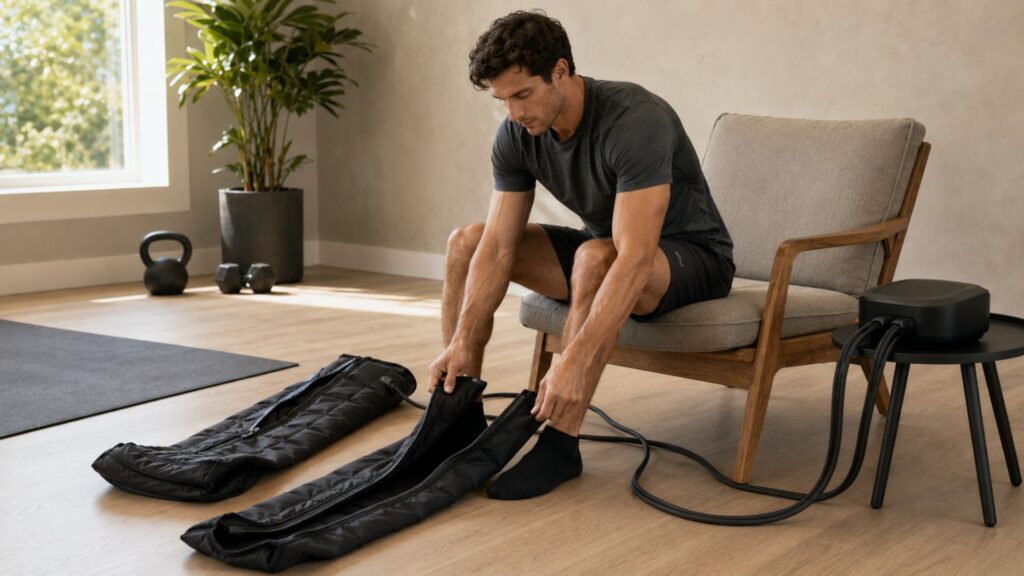
Compression boots are inflatable sleeves worn over the legs. They connect to an electric or battery-powered pump that controls the pressure inside each section of the boot.
They are also called:
- Recovery boots
- Air compression boots
- Pneumatic compression boots
- Intermittent pneumatic compression devices
- Sequential compression boots
Most models have four to eight separate air chambers. These chambers may cover the feet, calves, knees, hamstrings, and upper thighs.
Compression boots differ from compression socks. Socks apply continuous pressure while you wear them. Recovery boots repeatedly increase and release pressure during a timed session.
Medical intermittent pneumatic compression devices are also used in hospitals and lymphoedema treatment. However, these are prescribed and monitored for specific health conditions. Consumer recovery boots should not be used as a replacement for medical compression therapy.
How do compression boots work on your legs?
Compression boots use a repeated inflation and deflation cycle.
A typical cycle works like this:
- The chamber around the foot or lower calf inflates.
- The next chamber further up the leg begins to inflate.
- The pressure progresses towards the knee and thigh.
- The chambers hold the pressure briefly.
- The boots release the pressure before starting another cycle.
This process is known as intermittent pneumatic compression or IPC.
The upward pressure temporarily compresses the veins and surrounding soft tissue. This assists venous return, which is the movement of blood from the legs back towards the heart. It can also influence how fluid moves through the tissue and lymphatic system.
The exact pattern differs between devices. Some boots hold each chamber as the next one inflates. Others inflate and release one chamber at a time. More advanced systems allow you to turn off individual zones, change the pressure, or choose different massage patterns.
Do compression boots actually help with recovery?
Yes, compression boots may help reduce perceived soreness and make the legs feel more comfortable after exercise. Their effect on muscle repair and athletic performance is less certain.
A small trial involving 24 highly trained athletes found that 15 minutes of dynamic compression increased the amount of pressure participants could tolerate before feeling pain. This suggests short-term relief from tenderness following training (Sands et al., 2015).
Another study examined pneumatic compression after an upper-body workout. The 50 resistance-trained participants reported less soreness immediately after treatment and 24 hours later. However, the improvements in physical performance were negligible (Cranston & Driller, 2022).
Not every trial has produced positive results. A study involving 10 trained triathletes found that a 30-minute compression session did not significantly improve a later five-kilometre running time, blood lactate levels, or perceived recovery compared with passive rest (O’Donnell & Driller, 2015).
More recently, a 2025 trial involving 48 professional combat athletes found that pneumatic compression at 100 mmHg improved tissue perfusion and muscle elasticity compared with passive rest. However, muscle damage markers still increased across the groups, and improvements in physical performance were not consistent across every measurement (Trybulski et al., 2025).
The practical answer is that compression boots can make recovery feel better. That does not automatically mean the muscle has repaired faster or is ready for another intense session.
What are the potential benefits of compression boots?
Compression boots may provide several practical recovery benefits:
- Temporary relief from muscle soreness
- Reduced feelings of heaviness in the legs
- Short-term changes in tissue perfusion
- A comfortable way to relax after training
- Passive recovery that requires little physical effort
- Temporary relief from mild exercise-related swelling
They are particularly popular with runners, cyclists, triathletes, football players, and people who perform frequent lower-body training.
Recovery boots may also suit people who find foam rolling uncomfortable or tiring. You can sit or lie down during a session without needing to hold a position or manually work on each muscle.
If soreness is your main concern, see our full guide on how to relieve sore muscles and DOMS.
Do compression boots remove lactic acid?
Compression boots should not be marketed as a way to “flush out lactic acid” or remove toxins from your muscles.
Lactate is produced during demanding exercise, but it does not cause the soreness that appears one or two days later. The body also processes lactate relatively quickly once exercise has stopped.
Delayed onset muscle soreness is more closely related to microscopic stress within the muscle, followed by an inflammatory response. Increasing fluid movement does not prove that damaged muscle fibres are repairing faster.
Compression boots may change circulation and make the legs feel less tight. That is different from detoxifying the body or removing stored lactic acid.
How long should you use compression boots?
A session of around 15 to 30 minutes is a reasonable starting point for a healthy adult using compression boots for exercise recovery.
Several sports recovery studies have used sessions within this range. However, that does not mean one duration is ideal for every device or person. Some manufacturers offer longer programmes lasting 45 or 60 minutes.
Start with a shorter session and a low or moderate setting. You can adjust the duration after seeing how your legs respond.
Longer and stronger sessions are not automatically more effective. Always follow the instructions provided with your specific recovery boots.
What pressure should you use?
Use enough pressure to feel a firm and consistent squeeze without pain, numbness, or tingling.
There is no universal pressure setting that suits everyone. Different devices measure and deliver pressure differently, even when they display the same mmHg number.
Your body size, training load, comfort level, and reason for using the boots can also affect the right setting.
Beginners should usually start with the lowest setting. Increase the pressure gradually if the session remains comfortable. A harder squeeze does not guarantee faster recovery.
Stop the session if you experience:
- Sharp or increasing pain
- Numbness or persistent tingling
- Cold, pale, or discoloured feet
- Worsening swelling
- Dizziness or shortness of breath
- Skin irritation that does not settle
When should you use compression boots?
Compression boots are commonly used immediately after exercise or later on the same day.
There is no firmly established best time that works for every athlete. Using them after a long run, cycling session, competition, or demanding leg workout is mostly a matter of convenience.
They may also be used on a rest day when the legs still feel sore or heavy. However, recovery boots should not replace gentle movement completely. Walking, mobility work, sufficient food, hydration, and sleep still have a larger role in overall recovery.
If you are competing twice in one day, compression boots may improve comfort between events. The current evidence does not guarantee that they will restore speed, strength, or endurance before the next event.
Are compression boots safe?
Compression boots are generally well tolerated by healthy adults when the sleeves fit correctly and the pressure remains comfortable.
Possible minor problems include warmth, sweating, temporary pressure marks, discomfort, and skin irritation. Poorly fitted sleeves or excessive pressure may also irritate nerves or restrict circulation.
Do not use consumer compression boots without medical clearance if you have:
- A known or suspected deep vein thrombosis
- Severe peripheral arterial disease or poor circulation
- Uncontrolled heart failure or pulmonary oedema
- An active skin infection
- Leg ulcers, burns, or open wounds beneath the sleeves
- Significant loss of sensation or severe neuropathy
- Unexplained swelling in one or both legs
- A recent operation or serious leg injury
Pain and swelling in one calf or thigh can be signs of deep vein thrombosis. The affected area may also appear red or discoloured. Do not use compression boots to treat these symptoms. Seek medical assessment instead, as advised by Healthdirect Australia.
Sudden breathlessness, chest pain, fainting, or coughing up blood may indicate a pulmonary embolism. Call 000 for emergency assistance if these symptoms occur.
Can compression boots prevent deep vein thrombosis?
Medical IPC devices are used in hospitals to help prevent deep vein thrombosis in patients who cannot move normally. This does not mean consumer recovery boots should be used to prevent or treat blood clots at home.
Hospital devices are selected, fitted, and monitored by healthcare professionals. The pressure, treatment duration, and patient’s condition are considered before therapy begins.
Anyone at increased risk of blood clots should speak with a doctor about appropriate prevention. Recovery boots are not a substitute for prescribed compression, anticoagulant medicine, or medical assessment.
Can you use compression boots every day?
Healthy adults may be able to use compression boots daily if the device instructions permit it and each session remains comfortable.
However, daily use is not essential for recovery. Research has not established that using them every day produces better long-term results than occasional use after demanding sessions.
Persistent soreness, swelling, or heavy legs should not simply be managed with more compression. These symptoms may indicate that your training load, recovery routine, or health needs further attention.
Are compression boots worth using?
Compression boots are worth considering if you frequently experience tired legs and value convenient, passive recovery.
Their strongest benefit appears to be short-term comfort. They may reduce how sore or heavy your legs feel, but they are not proven to rebuild muscle faster or consistently improve your next performance.
For people on a limited budget, basic recovery habits should come first. Prioritise sleep, suitable training loads, hydration, and enough protein and carbohydrates before spending heavily on recovery equipment.
If you plan to use them regularly, compare chamber design, sizing, pressure range, portability, warranty, and return policies. Our guide to the best compression boots available in Australia covers these differences in more detail.
What should you remember about compression boots?
Compression boots rhythmically press and release the legs to assist venous blood and fluid movement. They can temporarily reduce soreness and make tired legs feel better after exercise.
What they cannot promise is faster muscle repair, improved performance, or protection against injury.
Treat recovery boots as an optional addition to a sound recovery routine. Use a comfortable pressure, follow the device instructions, and avoid them when unexplained swelling or an underlying medical condition is present.
Frequently Asked Questions
Quick answers about comfort, post-workout use, swelling, and how compression boots compare with compression socks.
Should compression boots hurt?
No. Compression boots should feel firm but comfortable. Stop the session if you experience pain, numbness, persistent tingling, or changes in skin colour.
Can you use compression boots after running?
Yes. Many runners use compression boots after long runs, interval sessions, races, or hill training. They may reduce perceived soreness, but they do not guarantee faster physical recovery.
Can compression boots reduce swelling?
Compression boots may temporarily reduce mild fluid accumulation after exercise. Unexplained, severe, or one-sided swelling should be medically assessed rather than treated at home.
Are compression boots better than compression socks?
Neither option is universally better. Compression socks provide continuous pressure and can be worn while moving. Compression boots apply changing pressure during a dedicated recovery session. The better option depends on your purpose, comfort, and medical needs.
References
Cranston, A. W., & Driller, M. W. (2022). Investigating the use of an intermittent sequential pneumatic compression arm sleeve for recovery after upper-body exercise. Journal of Strength and Conditioning Research, 36(6), 1548–1553. https://doi.org/10.1519/JSC.0000000000003680
Healthdirect Australia. (2025). Deep vein thrombosis. https://www.healthdirect.gov.au/deep-vein-thrombosis
O’Donnell, S., & Driller, M. W. (2015). The effect of intermittent sequential pneumatic compression on recovery between exercise bouts in well-trained triathletes. Journal of Science and Cycling, 4(3), 19–23.
Sands, W. A., McNeal, J. R., Murray, S. R., & Stone, M. H. (2015). Dynamic compression enhances pressure-to-pain threshold in elite athlete recovery: Exploratory study. Journal of Strength and Conditioning Research, 29(5), 1263–1272. https://doi.org/10.1519/JSC.0000000000000412
Trybulski, R., Klich, S., Valera-Calero, J. A., Kawczyński, A., Fernández-de-Las-Peñas, C., & Kużdżał, A. (2025). Effect of pneumatic and cold compression on muscle performance and recovery in combat sports athletes. Scientific Reports, 15, 44993. https://doi.org/10.1038/s41598-025-29014-1