This article has been medically reviewed by doctors to ensure it provides accurate, reliable, and up-to-date health information. We only use credible sources to support our content.
Red light therapy (RLT) has become one of the most popular wellness treatments for improving skin health, reducing pain, supporting muscle recovery, and promoting overall wellbeing. As more people invest in LED face masks and full-body red light therapy panels, one question continues to come up: Do you need eye protection during treatment?
The short answer is it depends on the device you’re using. Most consumer LED face masks are designed to be used safely without protective goggles when used as directed. On the other hand, higher-powered LED panels and medical laser devices often produce much brighter light, making protective eyewear a sensible precaution—particularly during facial treatments.
Understanding the difference between these devices can help you use red light therapy safely while getting the most from every session.
Key Takeaways
- Most consumer LED face masks can generally be used without protective goggles when you follow the manufacturer’s instructions.
- High-powered red light therapy panels often warrant eye protection, especially during facial treatments.
- Current research suggests therapeutic red and near-infrared light are generally safe for healthy eyes when used appropriately.
- Avoid staring directly into high-intensity LEDs, even if they don’t cause immediate discomfort.
- People with existing eye conditions, recent eye surgery, or light sensitivity should consult a healthcare professional before starting red light therapy.
- Always follow your device manufacturer’s safety recommendations, as eye protection requirements vary between devices.
Do You Need Eye Protection for Red Light Therapy?
It depends on the type of red light therapy device you’re using. Most consumer LED face masks designed for home use generally don’t require protective goggles when used according to the manufacturer’s instructions.
In contrast, higher-powered LED therapy panels often recommend or include protective eyewear, particularly during facial treatments, while medical laser devices always require specialised safety goggles.
| Device | Eye Protection |
|---|---|
| LED face mask | Usually optional |
| LED therapy panel | Often recommended |
| Medical laser device | Required |
| Clinical eye photobiomodulation | Follow clinician instructions |
Rather than asking whether red light is safe, it’s more accurate to ask whether your specific device produces enough light to justify additional eye protection. Lastly, if you’re undergoing clinical eye photobiomodulation, follow your healthcare provider’s instructions.
Why Are People Concerned About Eye Safety?
People are concerned because red light therapy devices can appear extremely bright, even though brightness doesn’t necessarily mean they’re harmful. Many people associate bright light with eye damage, but different wavelengths affect the eyes differently.
Unlike ultraviolet (UV) light, which can damage eye tissue and DNA, therapeutic red light usually falls between 630–660 nm, while near-infrared light commonly ranges from 810–850 nm. These wavelengths are used in photobiomodulation because they interact with cells differently than UV or blue light.
Research suggests that therapeutic doses primarily stimulate mitochondrial function rather than causing photochemical damage seen with shorter wavelengths.
Are LED Face Masks Safe Without Goggles?
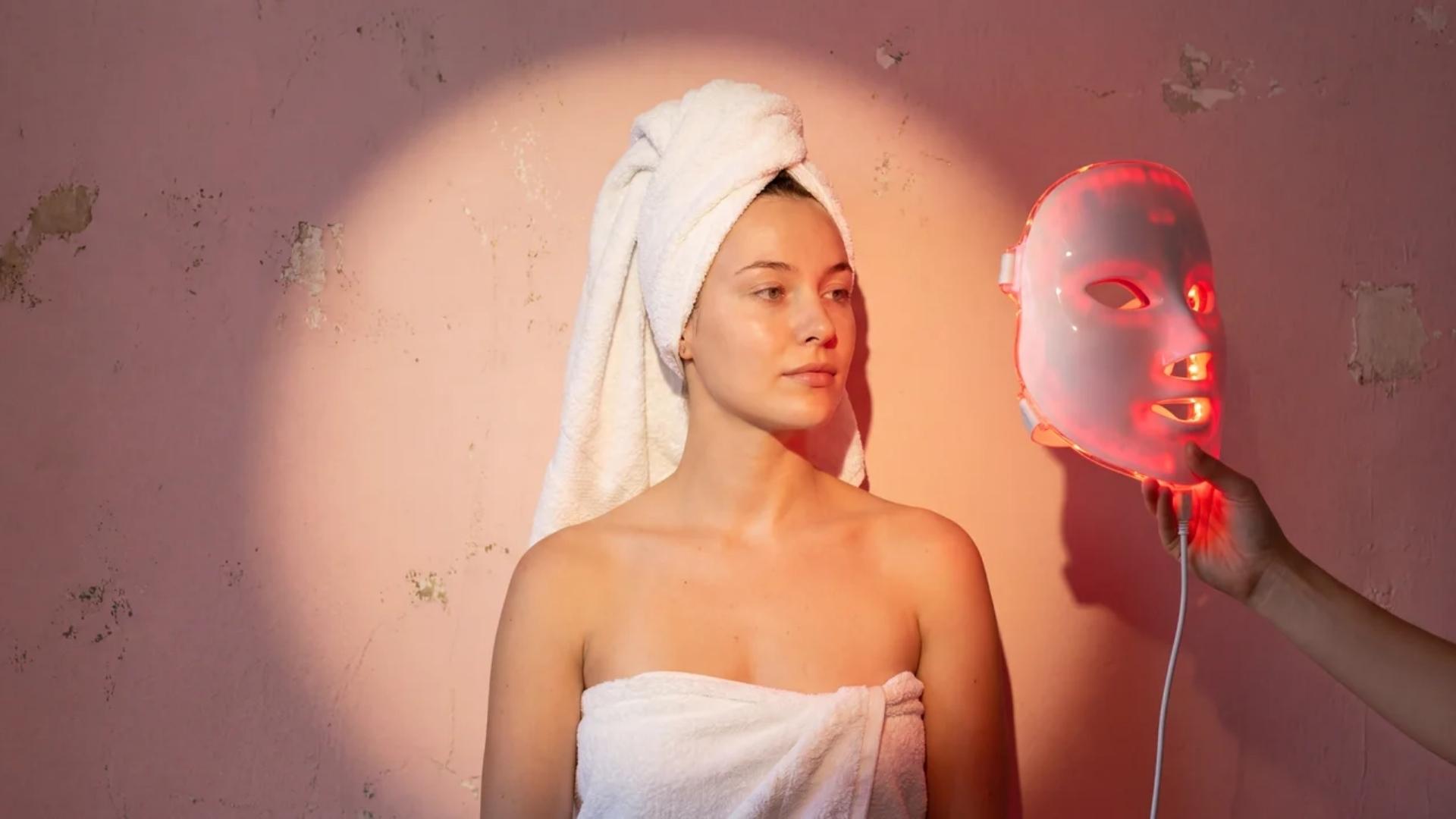
Yes, most consumer LED face masks are generally safe to use without goggles when used according to the manufacturer’s instructions.
These devices are specifically designed for facial treatments and typically operate at lower irradiance levels than full-body panels, making them suitable for regular at-home use. Many also include built-in eye shields or are designed to minimise direct eye exposure.
If you’re looking for a high-quality device, we’ve rounded up the best red light therapy masks to help you compare trusted options, including some of our top recommendations below.
Regardless of the mask you choose, avoid staring directly into the LEDs during treatment, and if the light feels uncomfortable, simply close your eyes or use any protective inserts provided.
If you have glaucoma, retinal disease, severe dry eye, have recently undergone eye surgery, or are otherwise concerned about your eye health, speak with your healthcare provider before starting red light therapy.
Do Red Light Therapy Panels Require Goggles?
Often, yes. Wearing protective goggles is recommended when using high-powered red light therapy panels, especially for facial treatments. These devices usually produce much greater light intensity than consumer face masks.
Although there is little evidence that therapeutic red light damages healthy eyes, prolonged exposure to very bright LEDs can be uncomfortable. Protective eyewear reduces unnecessary exposure while allowing you to continue treating the rest of your body safely.
Many reputable manufacturers include goggles with their panels or specifically recommend wearing them during facial sessions.
Can Red Light Damage Your Eyes?
Current evidence suggests therapeutic red and near-infrared light do not damage healthy eyes when used appropriately. In fact, researchers are actively studying photobiomodulation as a potential treatment for several eye conditions.
These include:
- Age-related macular degeneration (AMD)
- Diabetic retinopathy
- Glaucoma
- Optic nerve disorders
- Dry eye disease
This doesn’t mean you should stare directly into powerful LEDs for extended periods. Instead, it highlights that the relationship between red light and eye health depends on the wavelength, dose, and treatment protocol rather than the colour of the light alone.
When Should You Wear Eye Protection?
You should wear eye protection whenever you’re using a high-powered LED panel, a medical laser device, or if you have an existing eye condition or increased light sensitivity.
Protective goggles are a sensible precaution if you:
- Treat your face with a high-powered panel
- Have recently undergone eye surgery
- Have retinal disease or glaucoma
- Take medications that increase light sensitivity
- Experience migraines triggered by bright light
- Notice discomfort during treatment
Even if goggles aren’t required, they can improve comfort during longer sessions.
Can You Keep Your Eyes Open During Red Light Therapy?
Yes, you can keep your eyes open with many consumer devices, but you shouldn’t stare directly into high-powered LEDs. Looking away naturally or closing your eyes during facial treatments can reduce discomfort without affecting the treatment itself.
For higher-powered panels, wearing goggles is usually the safer option, especially if the manufacturer recommends them.
The Bottom Line
Most healthy adults don’t need to worry about eye damage from red light therapy when using quality devices correctly. Consumer LED face masks are generally safe without goggles, while higher-powered LED panels often warrant eye protection because of their greater brightness and intensity.
The safest approach is simple: choose a reputable device, follow the manufacturer’s instructions, avoid prolonged direct exposure to powerful LEDs, and wear protective eyewear whenever recommended. If you have an existing eye condition or increased light sensitivity, seek personalised advice from your healthcare provider before beginning treatment.
References
Brouwer, A., et al. (2017). Light therapy: Is it safe for the eyes? Acta Psychiatrica Scandinavica, 136(6), 534–548. https://doi.org/10.1111/acps.12803
Hamblin, M. R. (2017). Mechanisms and applications of photobiomodulation. Biochemical Journal. https://doi.org/10.1042/BCJ20160753
Hernández-Bule, M. L., et al. (2024). Photobiomodulation in dermatology: Current applications and future perspectives. Pharmaceuticals, 17(4), 477. https://doi.org/10.3390/ph17040477
Wunsch, A., & Matuschka, K. (2014). A controlled trial of red and near-infrared light treatment for skin rejuvenation. Photomedicine and Laser Surgery, 32(2), 93–100. https://doi.org/10.1089/pho.2013.3616
Zhu, Q., et al. (2020). Near-infrared light therapy of eye diseases. Current Drug Targets, 21(11), 1054–1065. https://doi.org/10.2174/1570159X18666200721154840